
By TONY LOPEZ
Two major diplomatic offensives of President Ferdinand R. Marcos Jr. this May:
1) He hosts the 48th summit of ASEAN leaders on May 8, 2026 in Cebu, central Philippine. Main theme of the ASEAN summit is security—food, energy, and safety of ASEAN nationals. The solution is greater ASEAN cooperation thru dialogue, stability, and collective action to produce meaningful outcomes for the peoples of Southeast Asia.
2) He and the First Lady Louise Araneta Marcos go on a four-day state visit to Japan, May 26 to 29. They will be received by Their Majesties the Emperor and Empress of Japan at the Imperial Palace for a welcome ceremony, state call, and state banquet.
Strategic partnership
Marcos Jr.’s state visit aims to solidify the Philippines-Japan Strategic Partnership, focusing on securing, strengthening defense, economic, and maritime cooperation against regional geopolitical tensions. It marks a pivotal effort to bolster security in the West Philippine Sea and deepen economic ties.
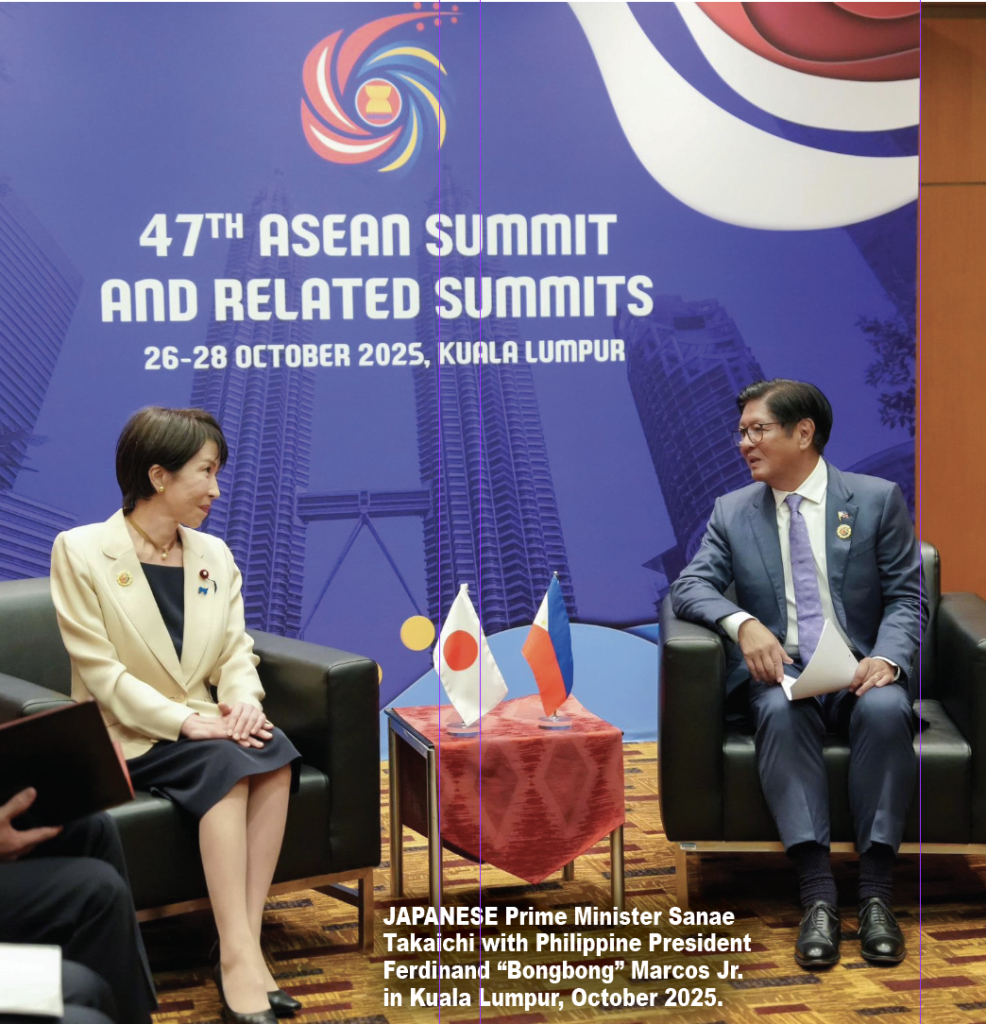
The President will hold a summit meeting with Prime Minister Sanae Takaichi to discuss the future trajectory of the Philippines-Japan Strengthened Strategic Partnership and continue their recent discussions on current international developments, especially with regard to energy and food security, and maritime security.
Two things have happened to Japan lately:
1) It is now the policeman of Asia, as the United States withdraws from international cooperation and engagements that involve money outflow, except when it goes to war. In five years, Japan will be the world’s third biggest military spender, after the US and China.
To do its job, Japan is increasing its defense spending, to 2% of GDP. In December 2025, Japan’s cabinet approved a record $58 billion defense spending aimed at strengthening missile, drone and maritime capabilities, amid mounting tensions with China.
In November, Prime Minister Sanae Takaichi said that Japan’s military could become involved if China were to take action against Taiwan, the self-governing island claimed by Beijing.
2) Japan has begun exporting weapons. The Philippines is supposed to receive four destroyer hand-me downs from Tokyo.
In 1945, after Japan was nuke-bombed twice by the US, Gen. Douglas MacArthur ordered Japan to demilitarize so it would never again conquer Asia under its Greater East Asia Co-Prosperity Sphere. Article 9 of Japan’s 1947 Constitution is the “Peace Clause” or “No-War Clause”.
It strictly prohibits Japan from maintaining land, sea, or air forces, renounces war as a sovereign right, and bans the use of force for settling international disputes. Apparently, to pursue peace you must be ready to go to war.
In today’s geopolitics, security means two things—military might and economic security. They don’t always go together, as proven by Iran in its war with the US. The US has the world’s mightiest military. It bombed Iran short of wiping out its civilization. Yet, after two months, Iran is standing still, dictating the terms of a ceasefire and the end to Donald Trump’s crazy and illegal war.
Why Iran’s resilience? Tehran has economic stranglehold of the Strait of Hormuz. Close it and you cut off 20% of the world’s supply of oil, and with it, chunks of the supply of fuel, food, and fertilizer.
The US, Japan and the Philippines have this great strategic idea called the Luzon Economic Corridor (LEC) to connect or integrate four major places—Subic, Clark, Manila, and Batangas into a premier logistics, manufacturing, and security hub.
As part of the G7’s Partnership for Global Infrastructure and Investment (PGII), LEC seeks to accelerate infrastructure development, enhance supply chains, create jobs, and counter Chinese economic influence in the Philippines.
Massive infrastructure
The long-term strategy is massive infrastructure development and attract investments, especially IT and AI, and reduce logistical costs and improve economic connectivity across northern and central Luzon.
Subic is a much coveted deep water bay that used to be the home base of the US Seventh Fleet, America’s largest. Given China’s looming presence, you cannot operate as a blue ocean navy and military power in the Indo-Pacific if you don’t have Subic’s strategic South China Sea location, deep waters, and defensible harbor.
Subic is now a 67,000-hectare special economic zone (Subic Bay Freeport) providing high-value investments, including shipbuilding, marine, and logistics.
Clark used to be America’s largest air base, from where the US mounted its Vietnam War and managed other wars. Clark has been repurposed into the Clark Freeport Zone (CFZ), Clark Special Economic Zone (CSEZ), and New Clark City.
It is a key driver of economic growth, industrial development, and urban decentralization, being transformed into a premier business, aviation, and tourism hub designed to reduce congestion in Metro Manila and attract foreign investments.
Manila, the capital
Manila is the national capital, the political, economic and military hub of the Philippines. Metro Manila, the national capital region, is home to 14 million Filipinos and the nation’s biggest companies and business elite.
And it is headquarters to the four service commands of the Armed Forces of the Philippines—army, navy, air force, and the Philippine National Police. One missile is enough to wipe the Philippines’ top military and police command and the nation’s political and business elite.
Not to be outdone, Batangas is the Philippines’ fastest growing province, the critical gateway to CALABARZON—Cavite, Laguna, Batangas, Aurora, Rizal and Quezon.
Batangas province is strategic as an alternate port to Manila, and as a premier industrial powerhouse hosting 16+ economic zones, massive power generation facilities, and extensive shipping.
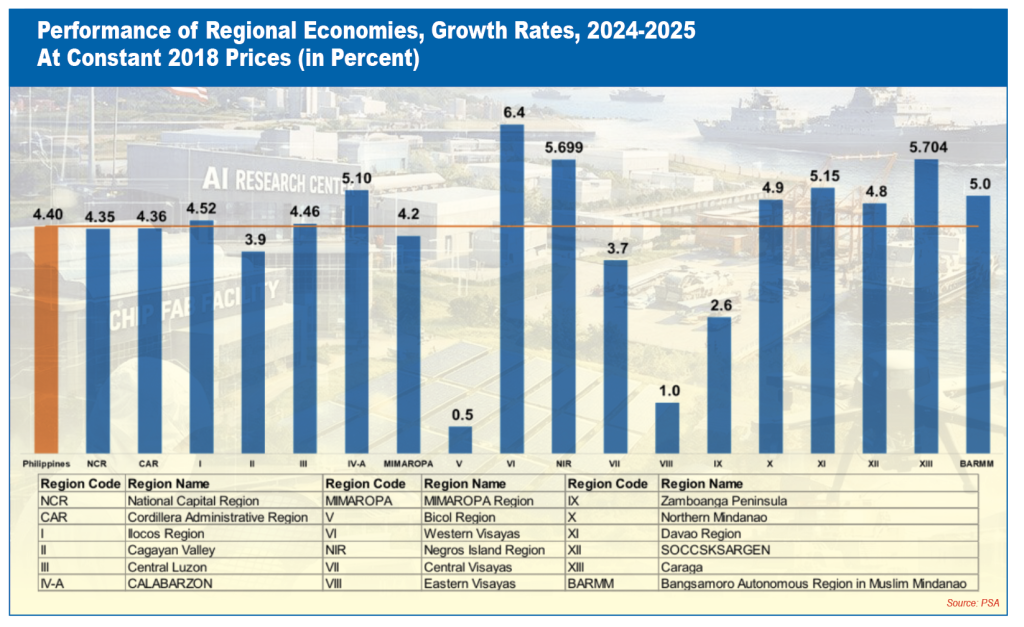
Incidentally, the regions straddled by LEC—Central Luzon, Metro Manila, and CALABARZON— are the richest nationwide and traditionally elect Philippine presidents.
In sum, LEC’s main strategic purposes:
Economic security: LEC is a “frontline” initiative to strengthen local supply chains for semiconductors, electronics, and critical minerals.
Investment hub: LEC aims to attract global capital into Philippine high-tech manufacturing and logistics.
Strategic Partnership: Trilateral collaboration between the Philippines, the US, and Japan to foster economic resilience and development.
This is unique: Plans to include an “economic security zone” within the corridor that offers specialized conditions to attract American, Japan, ASEAN and European investment.