
By TONY LOPEZ
Iran has two main strategic advantages in fighting the war against the United States and Israel: 1) control of the Strait of Hormuz and 2) vulnerability of the Gulf Countries (GC) to Iran’s sabotage and attacks.
Control of Hormuz chokes oil exports—20% of the world’s supply and the main revenue source of the GC.
Attacks on the GC’s military, civilian, oil processing and storage and desalinization plants inflict a trifecta—a) paralyze their oil and tourism revenues, b) deny them food and drinking water, and c) destroy any façade of stability and life of wealth and ease the GC have painstakingly cultivated in half a century. The Middle East, particularly Dubai and Doha, is probably as good as a goner as a travel, tourism, investment, and expat destination.
A fight to the finish
A third Iranian advantage is the morale of the military and Iran’s people, who have rallied behind their ruling regime, no matter how corrupt and ruthless it is. For most of 92 million Iranians, this conflict is a religious war and existential war—a war to the finish against the Great Satan—the United States, and the Small Satan, Israel.
Before America and Israel had notions of nationhood, Iran was a great civilization, a country of great kings– Achaemenid (559–330 BCE), the Sasanian and Safavid dynasties, Cyrus the Great, founder of the Persian Empire; Darius the Great, and Abbas the Great.
Difficult to invade
Finally, per AI, Iran is considered extremely difficult to invade, often described as a “fortress” “due to its rugged geography, vast size, and immense military challenges. Its mountainous terrain, particularly the Zagros mountains, combined with central deserts, creates natural barriers that make large-scale ground invasions tactically perilous and likely to result in a long, costly, and unwinnable conflict.”
These advantages have enabled Iran to wage the most successful asymmetric war against the world’s only military and economic superpower. No wonder Iran is in no mood to end the war.
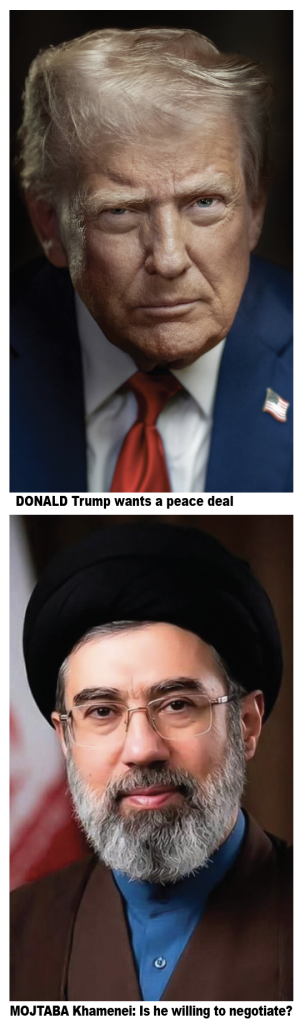
Because of Iran’s advantages, no one—not even Donald Trump of America, Mojtaba Khamenei of Iran, or Netanyahu of Israel—knows when and how to end the war.
Eat humble pie
The best scenario is for Trump to eat humble American pie, proclaim a victory (he has obliterated everything Iran can muster), and leave Iran even stronger than it was before Feb. 28—with 440 lbs of nearly enriched uranium (good for at least ten nuclear bombs), knowing by now it can hold Hormuz strait hostage anytime it wants to, and having demonstrated resilience to the best in war munitions ever invented by evil men.
Says The Economist: “Every day that Iranian strikes on ships keeps the Strait of Hormuz shut, around a fifth of the world’s output of oil and liquefied natural gas (LNG) remains stranded. Every day, therefore, traders update how much supply is lost for the year. As their estimates rise, so do energy prices. Brent crude, at $112 a barrel, is 54% dearer than before hostilities began. Gas prices in Europe are up by 85%.”
The Economist analyzes options for Trump, all of them bad: Mr Trump “can talk, leave, continue, or escalate. If he has not yet chosen one, it is because none of them are good.”
A ceasefire?
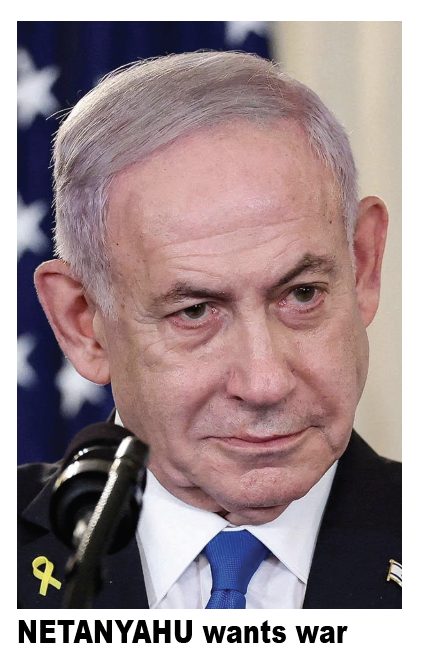
A ceasefire is least likely. “Having been attacked twice while in talks with America, Iran is understandably hesitant about another round. Its leadership is in disarray; the new supreme leader, Mojtaba Khamenei, has not been seen since he assumed the job on March 9th. America may wonder if any Iranian interlocutor truly speaks for the regime,” notes The Economist.
“America would enter any talks with maximalist demands: it also wants Iran to accept strict limits on its missile program and end its support for Arab militias. Iran has its own wish list, which includes reparations for the war and the closure of American military bases in the region. Neither side is in the mood to make concessions.”
Trumpiest option
Ending the war and declaring victory “would be the Trumpiest option, selling an inconclusive campaign as a decisive victory,” suggests The Economist.
“He did it in June when he claimed that Iran’s nuclear program had been ‘obliterated’ by American strikes—never mind that, eight months later, he described that same nuclear program as a threat. He might worry that voters will be harder to convince this time. Petrol prices in America are already up 34% from a month ago. But a majority of his Republican base still supports the war, and ending it now would give the oil-price shock seven months to abate before the midterms in November.”
Iran’s uranium with 60% purity
Other problems: “Iran would still have roughly 400kg of uranium enriched to 60% purity—and newfound resolve to fashion it into a nuclear bomb. It would also end the war with a chokehold on the Strait of Hormuz. For almost half a century, ensuring the flow of oil from the Persian Gulf has been the centerpiece of American policy in the Middle East. To end the war now would be to abandon that principle. Gulf states would be furious and fearful of endless extortion.”
The third option is to stay the course: “America and Israel could press ahead with several more weeks of air strikes. The number of Iranian missile-and-drone attacks on Israel and Gulf states has fallen from nearly 1,000 on the first day of the war to an average of less than 100 per day now. Some hawks in Washington argue that a few more weeks of attacks on the Iranian armed forces will drive that number lower still, or perhaps even cause the regime to collapse. Meanwhile, America would have time to send more warships to the region, and to work on building a coalition to provide escorts through the strait.”
“Yet there is no guarantee that any of this will work. As long as Iran can keep up sporadic attacks on shipping, it can probably keep the strait closed and deny Mr. Trump a victory.”