
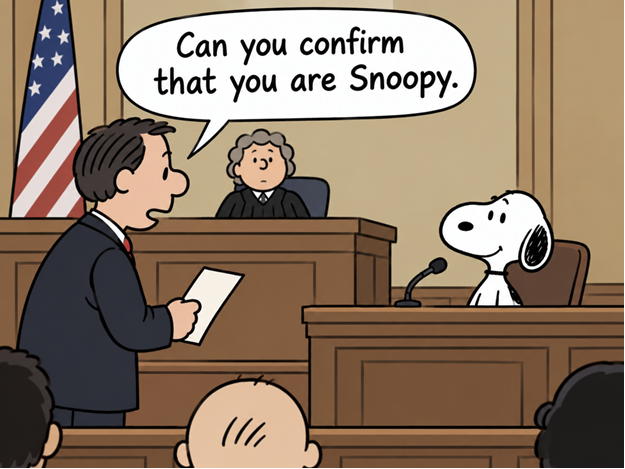
With the televised impeachment of Vice President Sara Duterte, the public now knows the truth about lawyers—-that we are nitpicky overthinkers.
To help viewers barely understand what is going on, I will flex my law degree to define some Baby Basic legal terms.
First, there are three branches of government to maintain a balance of power, even though a balance has only two sides which makes a seesaw. The Legislative Branch makes laws—-and then breaks them to get rich; the Executive Branch enforces the laws because the President is The Boss; and the Judicial Branch resolves legal disputes and decides if the laws are Constitutional to justify their pricey law degree.
Judicial proceedings obviously occur within the Judicial Branch comprised of sweaty lawyers with very proud moms. It follows The Rules of Court and are often presided by judges—-lawyers who dress up like Darth Vader.
But the Philippine Legislative Branch likes to feel special, aka sui generis, so they put it in The Constitution that they can Minecraft their own rules in their impeachment trial. If they don’t know what to do, they can always copy off the nerdy Judiciary’s Rules of Court.
An impeachment is not a judicial proceeding for many reasons: it occurs in the Legislative Branch, it doesn’t strictly adhere to the Rules of Court, and it has non-lawyer judges from the University of Prison and Iskul Bukol.
What is the point of an impeachment proceeding? To determine if a public official accused of wrongdoing should be removed from office. Hello, obvious. If it’s clear VP Duterte acted dishonestly and illegally, then she must be removed. And that’s what the prosecuting lawyers in the impeachment are trying to do—prove the obvious.
For example, a video of VP Duterte publicly threatening to have President Marcos assassinated is presented to the Impeachment Court. To be considered as evidence, the public video still had to be authenticated by the NBI, admitted by the VP herself, and supported by other recordings. Obvious ba?
Definition of basic legal jargon
A court is an authorized entity presided by a judge, BUT there is no basketball, racket, or beer allowed. You refer to the Court as an individual if there is one judge, or a body like the group of judges in the Impeachment Court. Lawyers need to sway the Court to win a case, that’s why they call the judge “Your Honor” and say, “May it please the Court.”
A proceeding is a formal process that follows official rules for bringing an action, resolving a dispute, or applying a law. You know it’s a proceeding because the judge always says, “Please proceed” or “You may proceed”.
The Rules of Court dictate the official way to conduct hearings to ensure that the proceedings are done fairly, efficiently, and consistently. If you come to Court to play, you must follow The Rules of Court. If you ignore it, you look dumb and everyone will ask if you really passed the Bar.
To testify is to make a solemn declaration under oath. Testify originates from the Latin testis which means witness. In Law School we were half-jokingly told that males who testified held onto testicles (I don’t know whose) under oath. Now if that’s how you testify, then how does the accused rectify?
In ancient times, only a male can be a witness in court. Now that those crusty misogynists are dead, women can now testify in court, and some lawyers call them “Madame Wetness”.
To win your case, you must present evidence, which in Latin means plain, apparent, or clear. How do lawyers prove or disprove the obvious? By presenting many other obvious things.
For example, in the latest hearings on the Statement of Assets, Liabilities, and Net Worth (SALN), Atty Batu of the Office of the Ombudsman was asked to confirm each pertinent section in the law as each provision was read by the defense lawyer when it is already written as law. That’s like asking the witness to confirm that the STOP sign says stop.
“Objection Your Honor” is said by a lawyer to thwart anything the opposing lawyer is trying to do. To support his objection, the objector can state whatever convenient legalese he can think of. Examples below.
“Leading” – when the examining lawyer seems to be answering his own question which is leading you to lose the case.
“Irrelevant” – a handy catch-all, because everything in Life is irrelevant.
“Vague” – when there’s no point, and there’s no real objection, but since it’s all unclear, you just object.
“Asked and answered” – and so what? So you just object for the heck of it.
“Sustained” is what the judge says when he agrees with the objection, which tells the objector to “keep doing what you’re doing”.
“Overruled” is a harsh way for the judge to disagree with an objection. A nicer way is to say “I’ll allow it” which tells the objecting counsel “You’re wrong. Better luck next time”.
Sometimes the judge doesn’t care to rule on the objections because you’re annoying, so he says, “Noted” which means, “You had your say but it will be ignored”. I use it on my kids all the time, as my husband The Count uses it on me.
My favorite objection is based on hearsay, when a witness states he heard someone say something like, “Dad said I was the favorite” or when a Homewrecker claims, “Your Dad said he was leaving all his money to me” which is also a heresy because it is established that only the Wife and kids deserve to inherit and the Homewrecker should die in Dirt.
Law is fun if you like to read, learn a dead language, and throw around words nobody knows. I hope the impeachment trial shows kids that if you study hard enough, maybe one day, you can go on TV to state the obvious.