
Pope Leo warns of dangers of AI, seeks transparency, vigilance, and regulation
The Vatican wants AI technology to be disarmed
By Tony Lopez
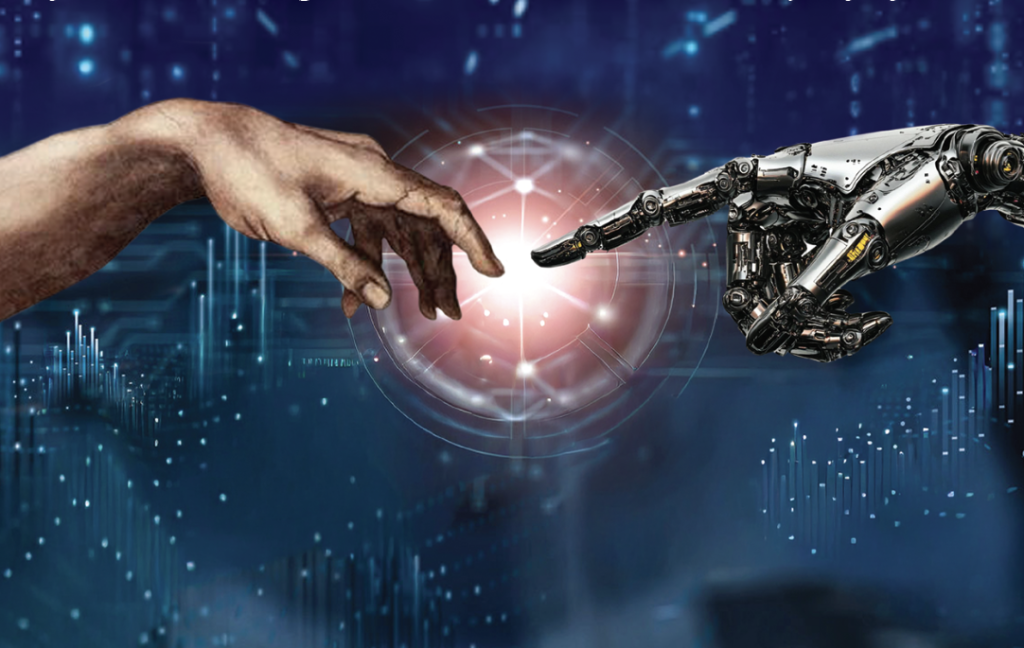
Technology is not simply a tool, says Pope Leo XIV, the first American pontiff.
Technology requires a two-fold commitment: One, a deepening of scientific research; on the other, the exercise of moral and spiritual discernment — “that safeguards the primacy of the human person, to ensure that it will always be human intelligence, with its conscience and freedom, that guides technical innovations and responsibly determines their use and limits.”
Artificial Intelligence can be a valuable tool,” the Pope concedes, but the technology “tends to amplify the power of those who already possess economic resources, expertise and access to data.” “This raises serious concerns, since small but highly influential groups can shape information and consumption patterns, influence democratic processes and steer economic dynamics to their own advantage, undermining social justice and solidarity among peoples,” Leo points out.
Data cannot be solely in private hands
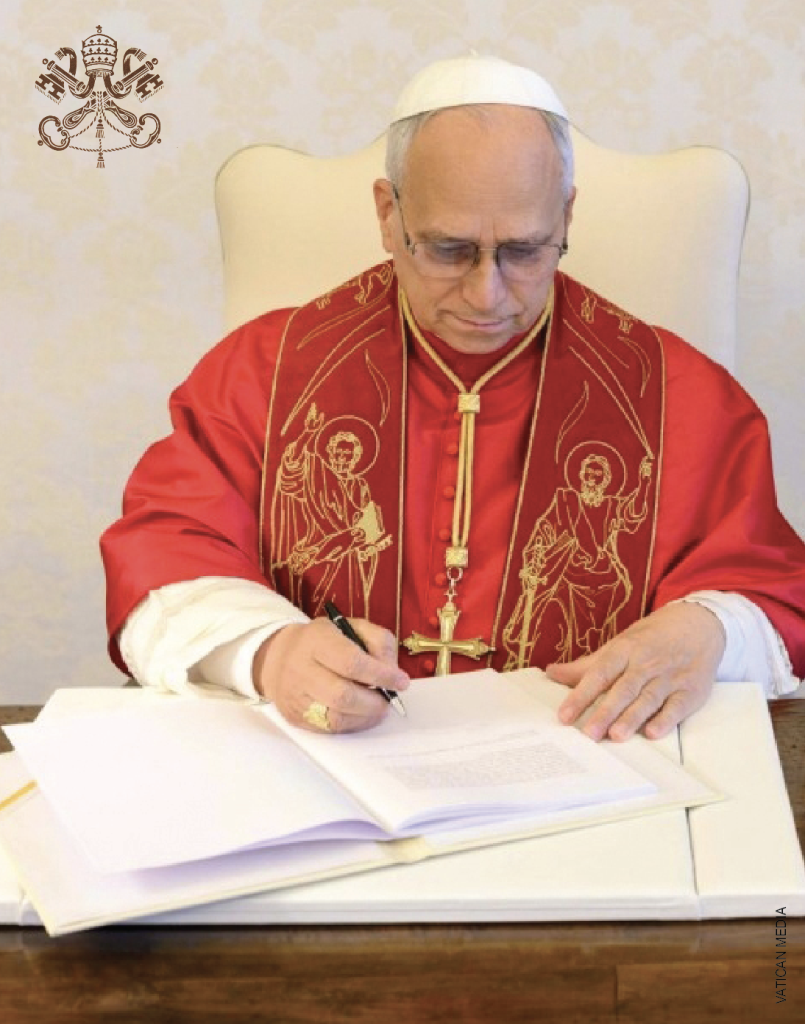
The Pope insists:
“Ownership of data cannot be left solely in private hands but must be appropriately regulated. Data is the product of many contributors and should not be treated as something to be sold off or entrusted to a select few. It is necessary to think creatively in order to manage data as a common or shared good.”
“Those who control AI will impose their own moral vision, which will become the invisible infrastructure of these systems,” warns the Pope, stressing the need for regulation and transparency, and what he calls “a measured and vigilant approach”.
The power of technology
Writes Leo: “Technology has the power to heal, connect, educate and protect our common home; but it can also divide, exclude and generate new forms of injustice. In the abstract, technology in and of itself is not a solution to humanity’s problems, just as it is not inherently evil. In practice, however, technology is never neutral, because it takes on the characteristics of those who devise, finance, regulate and use it.”
In using AI, advises Pope Leo, the leader of the world’s 1.4 billion Catholics, “we must avoid the misconception of equating this type of ‘intelligence’ with that of human beings.”
What AI cannot do
“These systems merely imitate certain functions of human intelligence. They often surpass human intelligence in speed and computational capacity, offering tangible benefits across many fields. Yet this power remains entirely tied to data processing. So-called artificial intelligences do not undergo experiences, do not possess a body, do not feel joy or pain, do not mature through relationships and do not know from within what love, work, friendship or responsibility mean. Nor do they have a moral conscience, since they do not judge good and evil, grasp the ultimate meaning of situations, or bear responsibility for consequences. They may imitate language, behavior and analytical skills, or even simulate empathy and understanding, but they do not understand what they produce, for they lack the affective, relational and spiritual perspective through which human beings grow in wisdom.”
The danger of technology as the standard
Echoing his predecessor Pope Francis’ Laudato Si encyclical, Pope Leo warned on Monday, May 25, 2026 that when technology “becomes the standard by which everything is judged, it begins to dictate what matters and what can be discarded, reducing creation to an object of exploitation and human beings to mere cogs in a system driven toward ever greater efficiency.”
“If technological development advances without a corresponding ethical and social progress, the result may be an increase in means without a growth in humanity: ‘having more’ without ‘being more’. In such a scenario, there is a risk that individuals will be evaluated principally according to the outcomes they produce.”
Magnifica Humanitas
So says Pope Leo’s encyclical, “Magnifica Humanitas”, on safeguarding the human person in the time of human intelligence.
Magnifica Humanitas was issued this 2026, the 135th anniversary of Pope Leo XIII’s Rerum Novarum (New Things) in 1891—the encyclical that gave impetus to the reflection on society, the economy and politics, which is now known as the “Social Doctrine of the Church.”
Recent technologies like nuclear energy, biotechnology, information technology, knowledge of our own DNA, and many other abilities, says Pope Leo, “have given those with the knowledge, and especially the economic resources to use them, an impressive dominance over the whole of humanity and the entire world.”
In the past, it was largely up to the State to guide and direct innovation. Today, however, the main drivers of development, says Leo, “are private, often transnational, parties that are endowed with resources and the capacity to intervene that surpass those of many Governments. Technological power thus takes on an unprecedented, predominantly ‘private’ aspect, which makes it even more challenging to discern, govern and direct such power toward the common good.”
Tower of Babel vs. Building Jerusalem
In confronting technology, Leo uses two biblical images—the Tower of Babel and rebuilding the walls of Jerusalem.
In Genesis, Babel is “a city built on pride and the claim to self-sufficiency; communication breaks down, languages are confused and people no longer understand each other”. In the Book of Nehemiah, narrates Leo, “the city is reborn, not through the initiative of one man, but through the shared responsibility of all: men, women, priests, artisans, heads of households and young people all play a part. It is an undertaking with God at the center, which rebuilds relationships before rebuilding with stones. Thus, ancient Jerusalem rediscovers a common language — not one of uniformity, but one of communion, namely the harmony that arises when all persons assume their own role and recognize that their strength comes from the Lord.”
Avoid the Babel syndrome
Preaches Pope Leo: “We must, then, avoid the ‘Babel syndrome’, namely the idolatry of profit that sacrifices the weak, a uniformity that neutralizes differences, and the pretense that a single language — even a digital one — can translate everything, including the mystery of the person, into data and performance. The risk of dehumanization — of building a future that excludes God and reduces the other to a means — is an ancient and ever-new temptation that today takes on a technical guise.”
Building a city means:
— A firm relationship with God, recognizing that the truth of his love calls us to life “in all its fullness” and communion with him.
— Accepting the limits and weakness of humanity without considering them an error to be corrected; not being misled by a technology that promises to free us from all weakness, and models of wellbeing that leave behind entire populations.
— A shared responsibility and courage. No one can single-handedly bear the weight of the challenges the world is facing, just as no one is so weak that they cannot play their part, for “power is made perfect in weakness”.
— An evangelical language. Avoid humiliating or antagonistic words, opting rather for clarity that sheds light and a frankness that unlocks new possibilities. Establish standards for discernment — the dignity of the human person, the universal destination of goods, the preferential option for the poor, care for our common home and peace — and let us translate these standards into practices such as responsible planning, the assessment of human and social impact, the inclusion of the most vulnerable, the promotion of digital literacy and guiding research and industry toward justice and peace.
AI and the environment
Leo warns on the impact of AI on the environment: “Current AI systems require enormous amounts of energy and water, significantly influencing carbon dioxide emissions, and place heavy demands on natural resources. As their complexity increases, especially in the case of large language models, the need for computing power and storage capacity grows too, which requires an extensive network of machines, cables, data centers and energy-intensive infrastructure. For this reason, it is essential to develop more sustainable technological solutions that reduce environmental impact and help protect our common home.”
Use of AI requires responsibility, transparency, governance
“The use of AI is never a purely technical matter: when it enters processes that affect people’s lives, it touches on rights, opportunities, status and freedom. Important and sensitive decisions — concerning employment, credit, access to public services or even a person’s reputation — risk being fully delegated to automated systems that do not know ‘compassion, mercy, forgiveness, and above all, the hope that people are able to change’, and can therefore give rise to new forms of exclusion. There are clearly harmful uses, such as the manipulation of information or violations of privacy. Yet there is also a subtler danger, for when AI systems present themselves as neutral and objective, they end up reflecting and reinforcing the stereotypes or ideological bias of their designers and developers.”
“Indeed, entrusting an algorithm in practice with the power to select who is worthy or not, without anyone bearing responsibility for that judgment, is to hand over the task of redefining the boundaries of human possibilities. In this process, political responsibility is also lost, not just empathy toward those excluded, which can, after all, be simulated. The exclusion of the vulnerable becomes cloaked in a veneer of neutrality and objectivity, against which it becomes difficult to raise objections. In this way, injustice goes unnoticed, and compassion, mercy and forgiveness — understood not as mere appearances but as real political actions — gradually disappear from view.”
Leo explains why use of AI requires vigilance
“In recent years, its private use has expanded significantly, prompting growing reflection on both the opportunities it offers and the risks tied to its rapid spread. In personal use, three aspects in particular deserve careful consideration: the ease with which results are obtained, the impression of objectivity and the simulation of human communication. The speed and simplicity with which information, complex analyses, media content and practical assistance can be accessed undoubtedly makes life easier. Yet they can also encourage excessive reliance and the search for ready-made answers, and weaken personal creativity and judgment.”
“The apparent objectivity of the responses and suggestions these systems provide can lead us to overlook the fact that they reflect the cultural assumptions of those who designed and trained them, with all their strengths and limitations. The artificial imitation of positive human communication — words of advice, empathy, friendship and even love — can be engaging and at times genuinely helpful. However, for less discerning users, it can also be misleading, creating the illusion of a relationship with a real personal subject. When words are simulated, they do not build genuine relationships, but only their appearance. “
“The artificial imitation of care or support can become particularly risky when it enters contexts where real relationships and emotional bonds are lacking. Here, the danger is not so much that a person may believe they are communicating with another person, but rather that they may gradually lose the very desire to form genuine human connections.”
Disarming intelligence
Finally, the Pope talks of disarming AI, which he says means “freeing it from the mentality of ‘armed’ competition, which today is not limited simply to the military context, but is also an economic and cognitive phenomenon. This entails a race for ever more powerful algorithms and larger datasets, driven by the desire to secure geopolitical or commercial dominance. To disarm means discrediting the assumption that technical power automatically confers the right to govern. To disarm does not mean rejecting technology, but preventing it from dominating humanity. It means freeing technology from monopolistic control and opening it to discussion and debate, therefore making it human-friendly and restoring it to the plurality of human cultures and ways of life.”
Pleads the Pope: “Our task today is not only ethical or technical. It is ecological in the deepest sense, for it concerns a new dimension of our common home. AI is already an environment in which we are immersed, as well as a force with which we must engage. For this reason, merely regulating it is insufficient; it must be disarmed, welcoming and accessible.”
The Pope writes: “The risk extends beyond the misuse of certain technologies. More gravely, the pervasive technocratic paradigm in which we are immersed, and that is amplified by the digital revolution and AI, threatens to normalize an anti-human vision.”
“In that vision, the fullness of life is equated with having more, reducing weakness, eliminating uncertainty and exerting total control. When efficiency becomes the ultimate measure of value, human beings are tempted to see themselves as a project to be optimized rather than as persons called to relationship and communion.”
“What does it mean to safeguard our humanity?” asks Pope Leo.
“Intelligence, when absolutized, overshadows other essential dimensions of life, such as affection, the will, commitment and relationships. Similarly, technical power, if left unbalanced, does not make us more capable; it makes us more isolated and more vulnerable to being dominated and excluded,” the Pope notes, adding, “when intelligence becomes self-referential, its true purpose of serving life and the human person is lost.”
Leo disdains perspectives that tend to foster enthusiasm for new technologies through a futuristic vision of an “enhanced human being” or “human-machine hybrid.”