
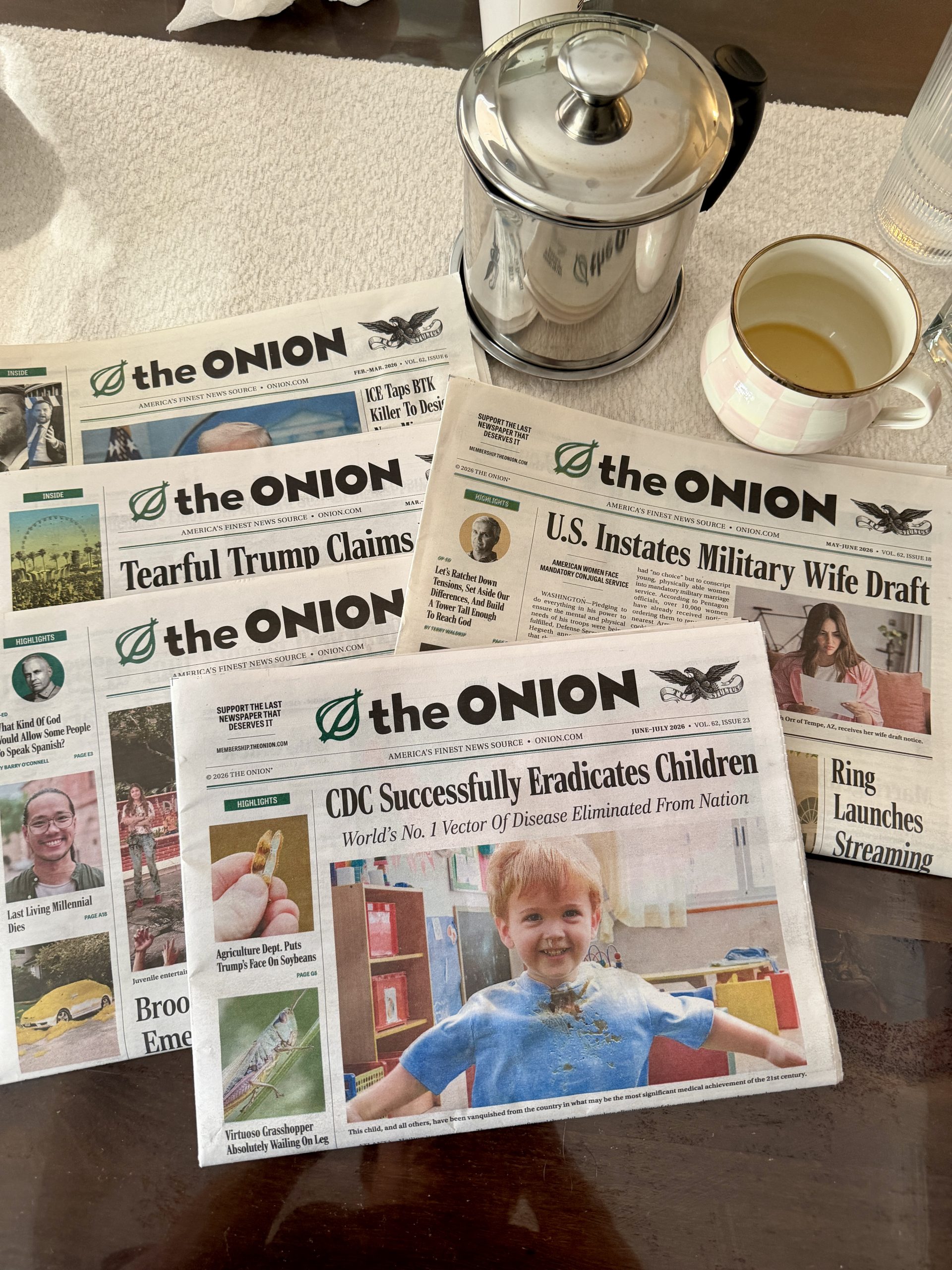
Before fake news got a bad rap, satire was part of comedy.
The Onion (1988) is the first satire newspaper that has reached general knowledge. Even my Gen Z son knows it. It began 38 years ago as a weekly newsprint at the University of Wisconsin-Madison. It was intermittently staffed by varied brilliant anti-socials who were hellbent on crafting comedic havoc.
“Who were The Onion writers? What kind of depraved minds were concocting this incendiary material? And where did I find them?” wrote Scott Dikkers in his book The Onion Story (2025).
In 1989, the founders sold The Onion to Scott Dikkers, a longtime cartoonist and contributor. As the longest serving editor-in-chief, Scott set The Onion’s satiric AP style standard that its known for today. Copycats have spawned since. But only The Onion has lodged itself in our psyches as THE Satire News Source that makes it readers wonder, “How will The Onion joke about this?”
Weekly insanity
Producing a weekly anything is HARD. Producing a print publication is harder. But producing a weekly print newspaper that is FUNNY? Insanely hard. You don’t think so? Try making these headlines funny.
Act of War – World Trade Center destroyed (New York Post, 9-12-2001)
Epstein files are heavily redacted
Isn’t History fun? Here’s how The Onion did it.
U.S. Vows to Defeat Whoever It Is We’re At War With (Sep 27, 2001)
CIA Realizes It’s Been Using Black Highlighters All These Years (Dec 01, 2005)
Straight from the source, Scott tells The Onion Story by theme instead of by time. It’s ok because I’m not going to remember dates anyway. What matters is he shows you how hard he struggled to Make It. Scott details the laborious production it took to sustain The Onion over three decades, and how he valiantly tried to maintain its cohesive tone and vision.
During Scott’s time at The Onion, they had to do Old School Work that every newspaperman has done in history. Type up all the stories. Print them at Kinko’s or from a-page-a-minute printer. Cut the printouts into lines to fit columns. Do a layout of text and graphics for each page. Paste EVERYTHING. Then physically bring the dummy layout to the printer. Often, the freshly printed newspapers are also distributed by the writers.
“We spent many late weekend nights at Comp-U-Type, brainstorming ideas, adding jokes to articles, and creating deadheads.” wrote Scott.
Online, it’s easier to “produce” a publication because you just literally post your story. You don’t even have to do much layout nor cut pictures to fit pages. Now the whole production process can be done digitally at little cost. But back then, it was grueling and expensive work.
Just coming up with appealing stories and catchy headlines is hard enough. But The Onion had to come up with humorous stories, pictures, and captions. Sometimes, they went too far that they lost advertisers. And you always need ad bucks to sustain all this sanity-saving comedy. Ironically, businesses keep the yuks coming.
But when The Onion lost a cigarette ad with its front-page headline “Tobacco Companies Announce: Secondhand Smoke Leads to Secondhand Coolness” it formed its editorial integrity, “we were unafraid to lampoon any target, no matter how powerful,” wrote Scott.
Satire is tiring
I’m a literal person so I didn’t appreciate satire before I studied comedy writing. Not many get it. Scott says satire the highest form of comedy.
It was only when I started studying comedy writing that I began to appreciate satire. I just took a satire writing class with Scott at Marc Warzecha’s The Sketch School. It’s so hard that I only did the first assignment.
Scott said you’re doing it right if it seems real. So when I’m told “I can’t tell if you’re joking.” I’m succeeding at satire.
Never-ending comedy
It’s self-explanatory. The Onion Story is an exposé of the nutty fruitcakes behind the newspaper’s satiric success. It’s a must-read for anyone who aspires to create comedy. It’s not limited to just The Onion but to the overall artist’s struggle to create comedy in many ways. You’ll also learn a few strategies to: create comedy in various platforms, build your brand, and get your work out there.
After The Onion,Scott shares the many comedic pursuits he tried. In 2013 he wrote How to Write Funny, a consistent bestseller.
“My intent with the book was to show that comedy writing, like anything else in life, is a learnable skill that anyone can master with practice. It was the book that I would have devoured when I was struggling to get traction with my nascent comedy endeavors.”
Scott is not yet done. He now teaches comedy writing and has a vibrant How to Write Funny online community. He has written many books on comedy, hosts a podcast, posts on social media, mentors writers and comedians, performs, and continues to write novels, nonfiction, and scripts.
There is never a shortcut to success. As The Onion Story has shown, it takes great persistence, fortitude, and total commitment to keep doing the hard work even after initial success. Yes it’s heartbreaking. But it’s also inspiring and rewarding to make people laugh.
Ivy is a Jesuit-educated lawyer turned humor columnist. See the latest Silicon Valley books @vyDigest on YouTube, Instagram, Facebook. She has a comedy channel @Humor Me Ivy on YouTube.
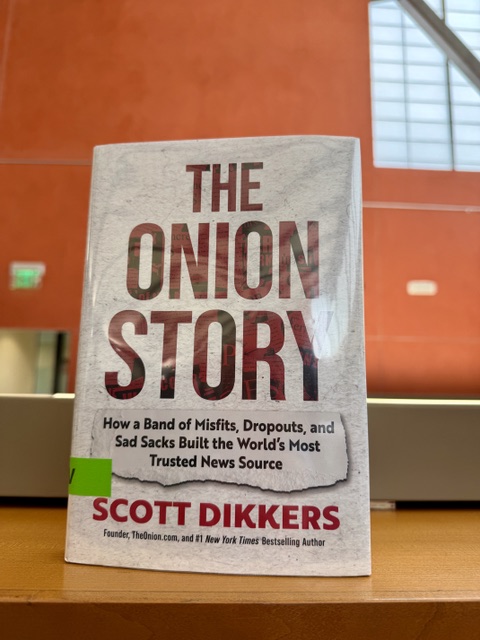
The Onion Story
By Scott Dikkers
Hardcover, 275 pages, 2025.
Matt Holt (BenBella Books)